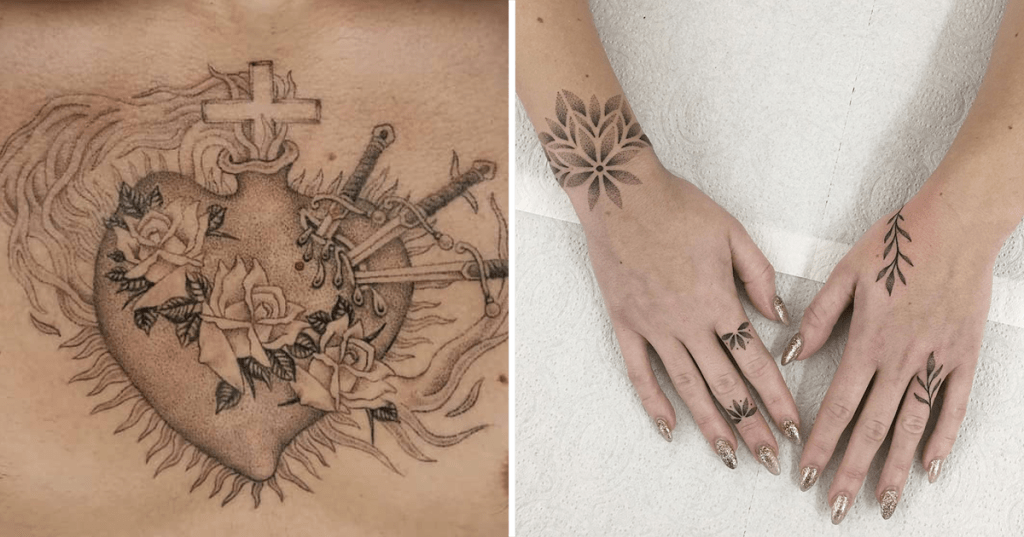
Handpoke tattoos, also known as “stick and poke” tattoos, are just that; tattoos applied using a single needle Ink Fanatic dipped in ink, as opposed to an electric tattoo machine. Like any hand-made craft or artwork, Handpoke tattoos are typically more organic looking than a tattoo applied by an electric machine.
If you go for shading, it will have more of a stippled appearance, since you’re relying on a single needle manually puncturing the skin, whereas an electric machine will puncture the skin around 100 times a second. Without shading, you’ll get more of a doodled effect (for example, an Ignorant Style tattoo). For enthusiasts, the rustic aesthetic of a Handpoke tattoo can be part of the appeal – consider the Japanese idea of wabi-sabi, an aesthetic philosophy directing us to see the beauty in imperfection.
The Handpoke style enjoyed a bump in popularity during the COVID-19 pandemic, as many folks at home with a lot of time to kill were experimenting with new hobbies. That being said, analog tattoos are nothing new – tattooing has been around for 200,000 years, and the first electric tattoo machine was only invented in 1891. So with that in mind, let’s take a closer look at how this practice has evolved over time.
Ancient Roots
Indigenous cultures have been tattooing for centuries, dating back to Ötzi the Iceman circa 3000 BC. Prior to the advent of the electric tattoo machine, all of them were applied by different “handpoke” methods. The Polynesians utilized a tool called a moli, dipped in ink they called pa’u, that was then poked into the skin. Traditionally, “moli” was made using bird claws, beaks, or fish bones tied to sticks.
Handpoke tattoo by Rosa Bluestone Perr
The Japanese have been practicing traditional tebori tattoos for over 400 years, a practice using a wooden or metal tool called a nomi with a set of needles fastened to it. Literally the word breaks down to te-, meaning “hand,” and -bori, “to carve.”
Modern Resurgence
Handpoke tattoos as we know them today have origins in prison and DIY punk subcultures, where aspiring tattooers didn’t have the materials or resources to utilize state-of-the-art technology. While many fashion platforms such as Hypebeast declared Handpoke tattoos a major trend around 2014-2015, the contemporary practice in Western subcultures had been a part of skate and punk subcultures for decades, owing to these subcultures’ emphasis on a DIY, or “do it yourself” ethos.
In fact, a 2013 book entitled Barred for Life: How Black Flag’s Iconic Logo Became Punk Rock’s Secret Handshake examines this phenomenon through visual representations of DIY tattoos of the seminal punk band’s four-bar logo, a frequent subject in Handpoke tattooing.
 Site Title
Leave a comment